Professional sanitation and food safety professionals in Brampton assist restaurants, food centers, bakeries, warehouses, and food service operations maintaining standards. They decontaminate regularly touched surfaces, food preparation surfaces, equipment, floors, drains, restrooms, and food handling spaces using certified products, maintaining proper ratios, and documenting contact times. You require scheduled cleaning based on hazard level, food throughput, food allergies, and regulatory assessments, plus verification records backing Hazard Analysis Critical Control Points, audits, and regulatory adherence. The following information explains how effective cleaning systems must contain.
Essential Summary
- Brampton's food safety cleaning experts maintain restaurants, grocery departments, commissaries, warehouses, bakeries, schools, mobile vendors, and allergen-sensitive operations.
- They disinfect high-touch surfaces, food-contact equipment, kitchens, floors, drains, restrooms, and storage areas using zone-based workflows to reduce cross-contamination.
- Approved providers verify approved sanitizer dilution, appropriateness, and exposure duration, then document finishing with tests, audits, and corrective-action records.
- Maintenance schedules ought to follow risk, throughput, format changes, incidents, and requirements, with routine, periodic, and annual duties designated by section.
- Liability, coded instruments, hazard analysis knowledge, sanitation expertise, WHMIS education, testimonials, and compliance-ready cleaning files are essential vendor characteristics.
Food Safety Cleaning Requirements for Brampton Venues
Any Brampton facility that processes, stores, prepares, packages, or distributes food needs food safety cleaning. You must apply it if your operation falls under health inspection, premises standards, or HACCP protocols. That requirement covers food service venues, employee cafes, supply centers, retail departments, meat shops, fish areas, local stores, and institutional food prep areas.
Proper sanitation protocols is also necessary in storage warehouses, production plants, freezer facilities, bakeries, school nutrition services, reception halls, and meal delivery centers. Portable and seasonal operations count as well, examples including catering vehicles, festival sellers, and pop-up stands. Your facility must have documented cleaning protocols when your employees handle raw materials, divide prepared foods, warm meals, or maintain allergen storage. In Brampton, hygiene stays discretionary; it constitutes regulatory, business, and safety requirements.
What Do Brampton Cleaning Experts Clean?
Professional cleaning teams specializing in Brampton disinfect high-contact surfaces, kitchen facilities, floors, and restrooms in compliance with food safety regulations. Emphasis on these spaces occurs because they pose maximum contamination danger, potential for accidents, and compliance issues.
If you grasp what they sanitize, you'll successfully ensure your facility meets required operational and regulatory standards.
Prioritizing High-Touch Surface Cleaning
organize disinfection schedules considering activity levels, infection risk, and how the space is used.
Proper verification of sanitizer compatibility, dilution, and contact time in relation to company guidelines and food safety requirements to ensure effectiveness. Specialists might utilize surface swabbing to check sanitization success
Cooking Zones, Walking Surfaces, and Restroom Environments
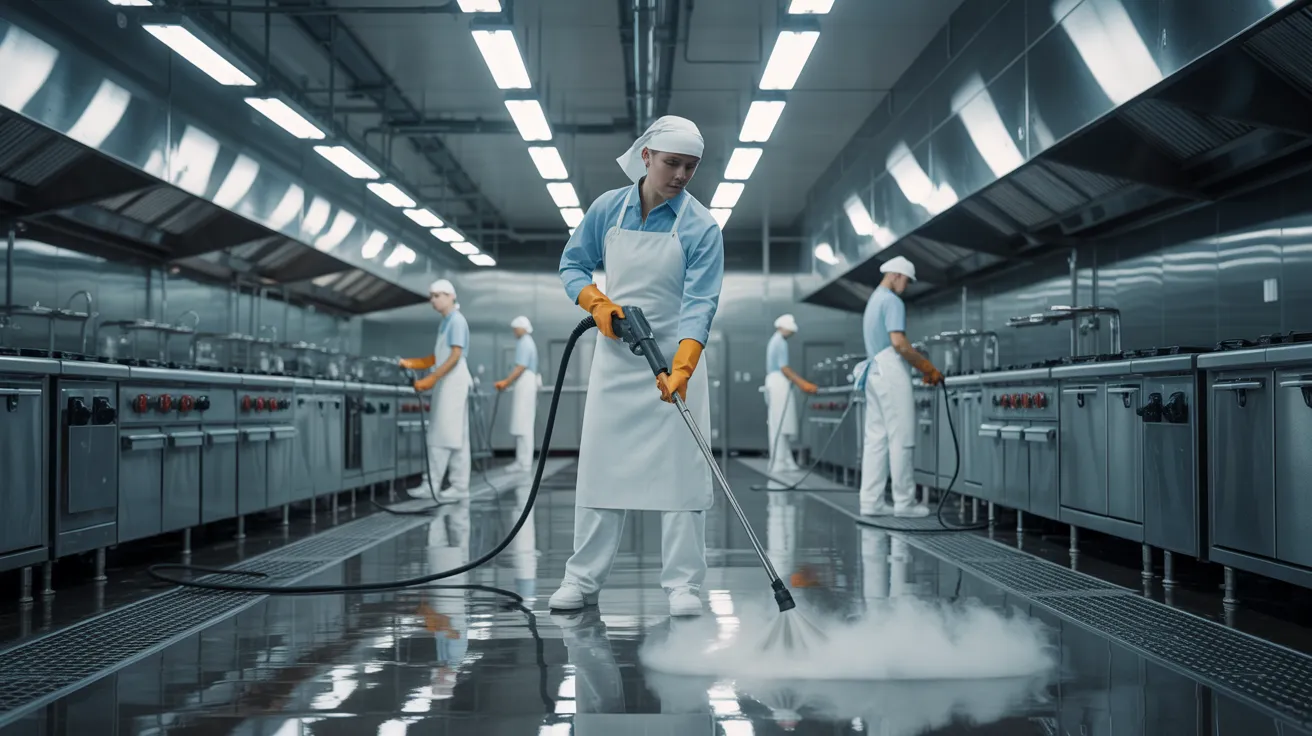
Brampton cleaning professionals will handle kitchens, floors, and restrooms since each space presents different food safety concerns, injury, and public health challenges. In industrial kitchens, you need degreasing on cook lines, equipment exteriors, drains, prep surfaces, and splash zones to minimize contamination and pest pressure.
Documented floor maintenance is likewise provided as part of the service.
For restroom sanitation, cleaners sanitize touchpoints, fixtures, partitions, dispensers, and waste containers, then replace products and reduce odor. They also maintain restaurant cleaning supply rooms where product storage, sink cleanliness, and drain systems impact daily sanitation standards and worker protection.
How Food Safety Cleaning Benefits Brampton Operations
To adhere to regulatory mandates and succeed in audits, Brampton establishments must follow food-safe cleaning standards. You also reduce bacterial spread through proper cleaning of food-preparation surfaces, appliances, and frequently-touched items. Most importantly, you safeguard public health by lowering the risk of foodborne illness in your facility.
Sanitary Standards Adherence
Food companies in Brampton face stringent health requirements, making food safety cleaning critical to satisfying health code requirements, ensuring the safety of patrons, and eliminating enforcement action. You must maintain clean food preparation areas, verifiable cleaning logs, proper chemical use, and documented employee protocols that align with municipal and provincial inspection expectations.
Strong sanitation assists in reducing allergen risks by decreasing buildup buildup on common tools and high-touch areas.
Cross-Contamination Prevention
Meeting regulatory requirements also depends on your capacity to stop cross-contamination during daily food handling and cleaning. You must keep raw items away from prepared dishes, clean work areas after each use, and keep cleaning products separate from food areas. Clear procedures reduce transfer risks and ensure ongoing adherence to health checks.
You should establish allergen separation to prevent major allergens from touching shared surfaces, containers, or equipment. Employ separate boards, labeled implements, and strict utensil labeling so staff don't mix items during preparation or service. Mandate washing hands following uncooked proteins, shellfish, egg items, or allergen products. Replace wiping cloths regularly, and verify sanitizer strength with test strips. When staff members receive training on these procedures every shift, you build a more hygienic, secure workplace that meets Brampton's food safety expectations consistently.
Public Health Protection
When food safety cleaning breaks down, you don't just risk a failed inspection—you heighten the likelihood of foodborne illness impacting customers, staff, and the wider Brampton community. You also weaken your role in protecting public health, especially in high-traffic food premises where contamination can spread quickly through surfaces, equipment, and touchpoints.
You require cleaning protocols that eliminate soils, disinfect appropriately, and confirm results. This requires following contact periods, selecting approved disinfectants, documenting procedures, and coaching employees to satisfy regulatory requirements. These controls promote pathogen control by minimizing pathogens before reaching surfaces or food. Throughout Brampton, strong cleaning protects vulnerable communities, minimizes disease potential, and proves your diligence. When you adhere to standards, you exceed regulations—you mitigate risk and enable safer food service region-wide.
Why Is Cleaning Essential for Food Safety Compliance?
Adopting thorough cleaning protocols solidifies food safety compliance by lowering contamination exposure, controlling pathogen growth, and ensuring your facility complies with sanitation requirements under HACCP-based programs and public health regulations. You confirm that food-handling surfaces remain visibly clean and microbiologically controlled, facilitating documented preventive controls and inspection readiness.
Proper cleaning procedures also improve allergen control by clearing residues that can trigger undeclared allergen exposure.
Establishing When to Plan Commercial Cleaning
Schedules for cleaning perform best when created based on risk, production volume, and regulatory requirements instead of just a set calendar.
Schedule drains, vents, storage racks, and hard-to-reach equipment zones weekly or monthly, using inspection data and sanitation records.
How Do You Choose Brampton Cleaning Experts?
Start by screening providers against food-safe sanitation requirements, not cost only. You should verify that each company understands CFIA, public health, and HACCP compliance standards relevant to your facility. Ask for proof of insurance, WHMIS compliance, documented staff training, and supervision practices. Review whether technicians understand cross-contamination risks, chemical handling, and traceable sanitation records.
Additionally, you need to evaluate service dependability and accountability. Obtain references from food facilities in Brampton, then review service speed, corrective measures, and communication practices. Verify the company conducts supplier reviews and can deliver compliance-ready records when inspectors or external parties need proof. Verify equipment upkeep, color-coded equipment are applied correctly, and location-specific dangers are identified. A capable service ensures compliance, product integrity, and your reputation.
What does a Food Safety Cleaning Plan encompass?
Develop a written plan that clarifies every sanitation responsibility, standard, and task before production begins. You should detail cleaning frequencies, approved chemicals, dilution rates, contact times, tools, and verification methods for each location, surface, and apparatus. Incorporate pre-operational inspections, corrective actions, and employee training requirements.
Your plan should also tackle prevention of contamination, waste management, pest-control tactics, and scheduled records for restrooms, drains, floors, and food-contact areas. Specify how you'll distinguish between uncooked and prepared items, support ingredient tracking, and keep accurate allergen labeling through validated cleaning between product changes. You should establish accountability, keep signed Brampton Food Safety and Sanitation records, and assess results against regulatory standards, HACCP controls, and customer requirements. When gaps appear, modify procedures immediately and retrain staff.
Popular Asked Inquiries
Can sanitation providers accommodate nighttime operations in Brampton properties?
If you run regulated facilities, you'll also require documentation that support inspections and maintain assurance.
Are emergency spill response solutions available from Brampton cleaning experts?
Yes, you can locate several Brampton cleaning professionals offering spill containment services. They manage hazardous materials, evaluate risks, contain affected areas, and execute rapid cleanup to reduce exposure and prevent disruption. You should confirm timeframes, training credentials, protocols, and disposal methods. If your facility needs compliance, choose a service that logs events, maintains standards, and ensures verification.
Can environmentally safe disinfectants be used safely on food-contact surfaces?
Yes, plant-based sanitizers can be suitable for food preparation areas if you pick disinfectants approved for food contact and regulatory compliant. You should check exposure duration, mixing proportions, and rinse procedures before use. Many natural-based solutions decrease toxic chemical contact, but you should gather confirmation of performance against target microorganisms. To preserve residue-free areas, you should follow manufacturer instructions exactly and confirm the disinfecting agent complies with food sanitation requirements.
Can maintenance plans adjust with production fluctuations?
Without question, cleaning plans are highly adaptable for seasonal shifts. Adapt schedules, labor allocation, disinfectants, and testing procedures to fit operational cycles while maintaining regulatory compliance. Minimize production downtime by organizing cleaning during equipment transitions, peak seasons, and equipment use patterns. Additionally update written procedures, instruction programs, and environmental monitoring to address transient threats, new allergens, or higher contamination levels. Periodic assessments preserve the program efficient.
Are professional cleaning companies providing employee instruction on hygiene protocols?
Yes, commercial cleaners often train your staff on hygiene standards. You get employee instruction on correct chemical application, exposure periods, contamination control, machine breakdown, and record keeping. They generally follow instruction with HACCP, GMP, and CFIA or regional health department requirements. Many perform sanitation audits to confirm adherence, spot deficiencies, and strengthen remedial steps. This allows you to sustain uniform processes, succeed in audits, and minimize contamination hazards regularly.
Closing Remarks
By partnering with Brampton commercial cleaning and food safety experts, you aren't simply tidying—you maintain your facility compliance-focused and your standards up to code. From kitchens to processing floors, every clean surface and organized space decreases contamination and avoids expensive losses. By arranging service on the right schedule and adhering to a systematic cleaning protocol, you protect your team, customers, and your standing. In a strictly regulated industry, clean spaces are mandatory—they're key to business compliance.